Multi-Agent AI Systems in Clinical Research: Beyond the Single-Model Paradigm
TL;DR
A single LLM cannot reliably run a clinical trial, but a system of specialised agents with defined roles, validation gates and failure protocols can handle regulatory documents, patient data and research coordination. Human-in-the-loop validation is non-negotiable, and multi-agent designs are not the right choice for every problem.

Diego Muñoz Casinos
Healthcare AI Engineer
The Single-Model Problem
When organizations first adopt AI in clinical research, the instinct is to throw a single large language model at the problem: "Let's use GPT/Claude to review our regulatory documents." The result is usually impressive in a demo and unreliable in production.
Why? Because clinical research tasks require different cognitive modes. Extracting adverse events from narratives is a different task than checking protocol compliance, which is different from generating statistical analysis plans. A single model, prompted generically, lacks the specialization and the guardrails to handle these diverse tasks reliably.
What Multi-Agent Means (and Doesn't Mean)
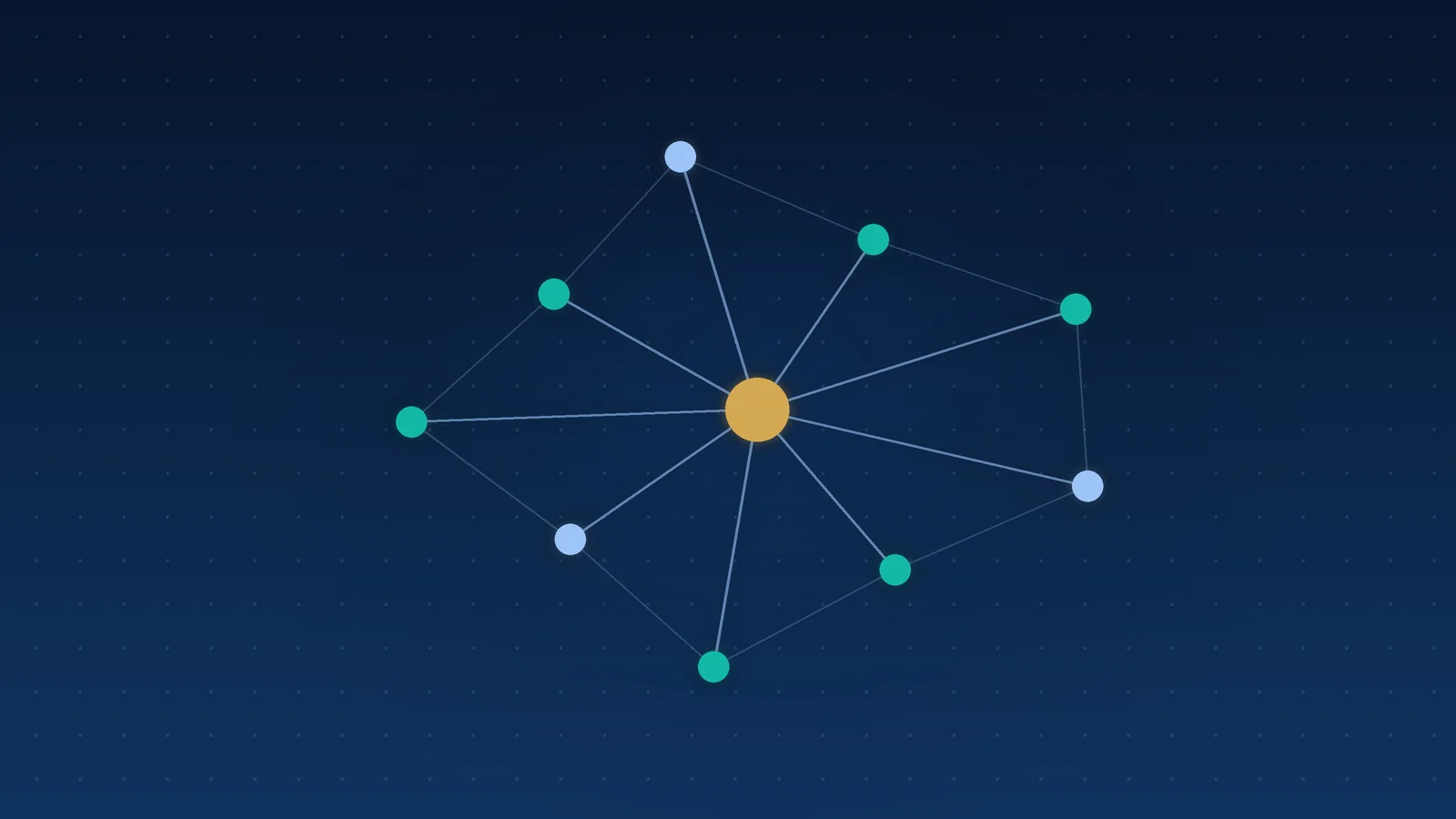
A multi-agent AI system is not just "multiple API calls." It's an architecture where:
- •Each agent has a defined role — e.g., a Protocol Compliance agent, a Data Extraction agent, a Statistical Review agent
- •Agents communicate through structured interfaces — not free-text chain-of-thought, but typed inputs and outputs with schemas
- •Validation gates sit between agents — the output of Agent A is verified before Agent B processes it
- •Each agent has its own failure protocol — what happens when confidence is low or input is malformed
The key difference from a monolithic approach is separation of concerns. Each agent can be independently tested, validated, and improved without affecting the rest of the system.
Architecture for Clinical Research
Here's a practical architecture our team has designed for clinical research document processing:
Layer 1: Ingestion Agents
- •Document Parser: Extracts structured content from PDFs, DOCX, and scanned documents (OCR + layout analysis)
- •Classification Agent: Routes the document to the correct processing pipeline (protocol amendment? SAE report? consent form?)
Layer 2: Processing Agents
- •Protocol Compliance Agent: Checks documents against the study protocol and ICH-GCP2 requirements. Has a structured checklist, not free-form analysis.
- •Data Extraction Agent: Pulls specific fields (dates, dosages, adverse events, lab values) into structured formats. Outputs typed JSON, not prose.
- •Medical Coding Agent: Maps free-text terms to MedDRA1/WHO-Drug3 coding with confidence scores.
Layer 3: Validation Agents
- •Cross-Reference Agent: Compares extracted data against existing database entries for consistency
- •Quality Gate Agent: Applies business rules and flags discrepancies for human review
- •Audit Trail Agent: Logs every decision, confidence score, and data transformation for regulatory traceability
Layer 4: Human Interface
- •Review Dashboard: Presents flagged items to clinical research associates with full context
- •Escalation Protocol: Automatically routes high-risk discrepancies to senior medical monitors
Why Validation Gates Matter — HITL Is Non-Negotiable
In clinical research, an error isn't just a bug — it's a potential regulatory violation with million-euro fines and, more importantly, patient lives at stake. No AI output in pharma or healthcare should reach a final decision without human-in-the-loop (HITL) review and sign-off. Multi-agent systems handle this through validation gates:
Between extraction and coding:
The Data Extraction Agent outputs an adverse event term: "patient experienced chest tightness." The Medical Coding Agent maps this to MedDRA PT "chest discomfort" with confidence 0.82. The Quality Gate checks: is confidence > 0.90? No → flag for human review. Even above 0.90, critical classifications (SAEs, SUSARs) always require human verification and digital signature before proceeding. A single model would silently propagate the uncertainty.
Between processing and storage:
Every data transformation is logged with: input, output, agent ID, model version, confidence score, and timestamp. Before any validated data enters the regulatory submission pipeline, a qualified reviewer must approve and sign the record. This creates the audit trail that GCP auditors and inspectors expect2 — not just traceability, but documented human accountability at every critical node. You can't retrofit this into a monolithic system.
Practical Benefits We've Observed
1. Testability
Each agent has a defined input/output contract. You can write unit tests: "Given this adverse event narrative, the extraction agent should return these structured fields." Try writing a meaningful unit test for a single monolithic prompt.
2. Incremental improvement
When the Medical Coding Agent underperforms on a specific domain (e.g., cardiac terminology), you update that agent's system prompt, reference dictionaries, or few-shot examples — without touching any other agent. The rest of the system continues operating. In a monolithic system, modifying the prompt for one task risks degrading performance on all others.
3. Regulatory transparency
When a regulator asks "how did your system classify this adverse event?", you can trace the exact path: Document Parser → Classification Agent → Data Extraction Agent → Medical Coding Agent → Quality Gate → Human Review. Each step is logged. This level of explainability is nearly impossible with a single-model approach.
4. Graceful degradation
If the Medical Coding Agent's API is down, the system doesn't stop. Documents continue through extraction and are queued for coding. In a monolithic system, any failure is a total failure.
Implementation Considerations
Cost management
Multi-agent systems make more API calls. Optimize by using smaller, faster models for simple routing tasks and reserving large models for complex reasoning. A classification agent doesn't need a frontier model — a smaller, faster model is sufficient and can be orders of magnitude cheaper.
Latency
Sequential agent chains add latency. Design for parallelism where possible: the Protocol Compliance Agent and Data Extraction Agent can process the same document simultaneously.
Prompt engineering per agent
Each agent needs a focused system prompt with domain-specific examples, output schemas, and explicit failure instructions. Generic prompts produce generic results.
Testing infrastructure
Build integration tests that run full document pipelines end-to-end. Measure not just individual agent accuracy but system-level outcomes: "For 100 SAE reports, what percentage were correctly processed without human intervention?"
When NOT to Use Multi-Agent
Not every clinical research task needs this architecture:
- •Simple Q&A over protocol documents → single model with RAG is fine
- •One-off data formatting → a script is better than AI
- •Tasks without validation requirements → the overhead of agents isn't justified
Use multi-agent when you need reliability, traceability, and independent validation — which is most production clinical research tasks.
Getting Started
- 1.Map your workflow: Identify the distinct cognitive tasks in your process. Each distinct task is a potential agent.
- 2.Define interfaces: What does each agent receive and produce? Use typed schemas, not free text.
- 3.Build the validation gates first: The gates are more important than the agents. They're what make the system trustworthy.
- 4.Start with two agents: Don't build the full architecture at once. Start with extraction + validation, prove the value, then expand.
References
- 1.MedDRA — Medical Dictionary for Regulatory Activities. Maintained by ICH. Available at: meddra.org
- 2.ICH E6(R3) — Guideline for Good Clinical Practice. International Council for Harmonisation. Available at: ich.org/page/efficacy-guidelines
- 3.WHO Drug Dictionary. Uppsala Monitoring Centre. Available at: who-umc.org
Designing a multi-agent AI system for your clinical research workflow? Our team architects these systems with spec-driven methodology — formal specifications, validation protocols, and measurable KPIs before any code is written. Let's discuss your architecture.
Designing a multi-agent workflow for clinical research?
We help architect, validate, and deploy multi-agent AI systems to the standards required in regulated environments.
Get in touch