LLM Temperature: The One Parameter That Changes Everything
TL;DR
LLM temperature sets how randomly a model picks its next word. In a healthcare pipeline a wrong value does not just give mediocre text, it gives unpredictably wrong output. Choose a low, documented default for clinical tasks and treat any increase as an explicit design decision that you test.

Diego Muñoz Casinos
Healthcare AI Engineer
The demo below answers a question that matters in healthcare AI: at what exact point does a "stable" model start generating dangerously variable responses?
What Does LLM Temperature Actually Do?
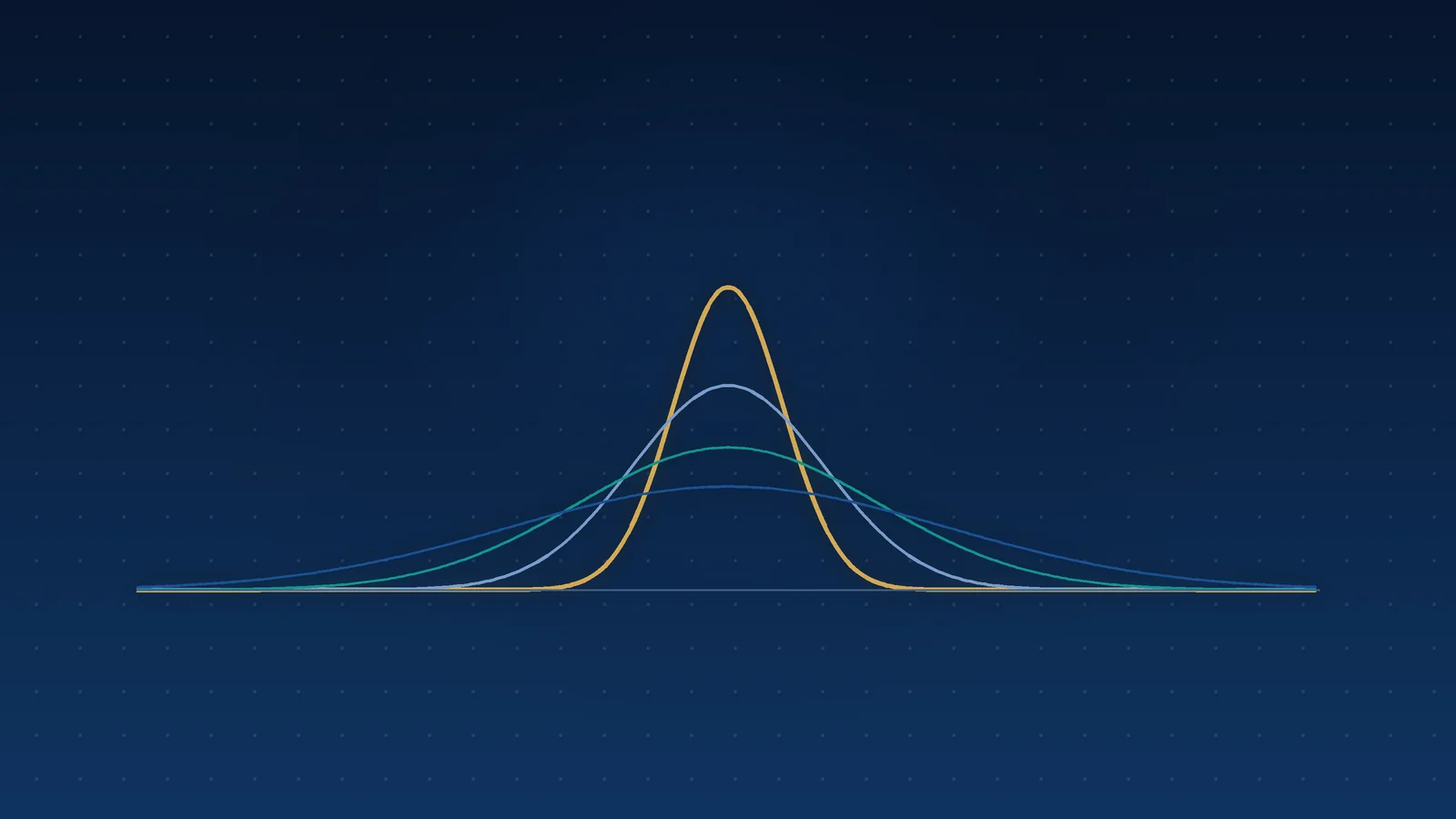
When a model generates text, it doesn't pick a word at random: it assigns scores to all possible continuations and chooses. Temperature controls how much it respects those scores — at T=0 it always picks the highest, at T=1 it treats them almost as equals.
P(i) = exp(logit_i / T) / Σ exp(logit_j / T)
Low T amplifies the gaps between scores. The top token captures most of the probability mass and the output becomes nearly deterministic. High T compresses those gaps. The distribution flattens and tokens with lower scores gain real probability. The formula has four steps and each one does exactly one thing — click the i button in the demo to walk through them.
Temperature in Healthcare AI
The medical tab swaps "The discussion was primarily ___" for "Based on vitals and labs, the patient appears ___ ." Same math. Different tokens: stable, improving, mild, moderate, critical, deteriorating, uncertain.
At T=0.1, "stable" holds above 95% of probability mass. Appropriate for a triage tool where consistency is the whole point. At T=0.5, "critical" and "deteriorating" carry real probability — even when the logits strongly favor "stable." That is not an edge case. That is the parameter working as designed.
Worth flagging: T=0 is greedy decoding, not true determinism. GPU floating-point operations, INT4/INT8 quantization, and tensor parallelism can all shift which token wins. For FDA SaMD or EU MDR contexts, treat all LLM outputs as probabilistic regardless of the temperature you set.1
A Safe Default
For production healthcare AI:
- •T = 0.0–0.2: extraction, classification, triage scoring, adverse event coding. Same answer every time.
- •T = 0.3–0.5: second-opinion tools. Human review mandatory.
- •T = 0.6+: drafts, summaries, brainstorming. Not for clinical decisions.
Not a creativity dial. A precision dial.
References
- 1.Anthropic API Documentation — Temperature parameter. Available at: docs.anthropic.com
- 2.OpenAI API Documentation — Temperature parameter. Available at: platform.openai.com/docs/api-reference
- 3.U.S. FDA — Artificial Intelligence and Machine Learning (AI/ML)-Based Software as a Medical Device (SaMD) Action Plan (2021). Available at: fda.gov
- 4.Holtzman A, Buys J, Du L, Forbes M, Choi Y. The Curious Case of Neural Text Degeneration. ICLR 2020.
Who validates your clinical LLM outputs?
We design validation protocols for healthcare AI systems — integrating technical, clinical, and regulatory criteria.
Get in touch