9 min read
The Invisible Filter That Decides Whether Healthcare AI Really Works
BiostatisticsClinical TrialsMulti-Agent AIBioinformaticsFDR
DM
Diego Muñoz Casinos
Healthcare AI Engineer
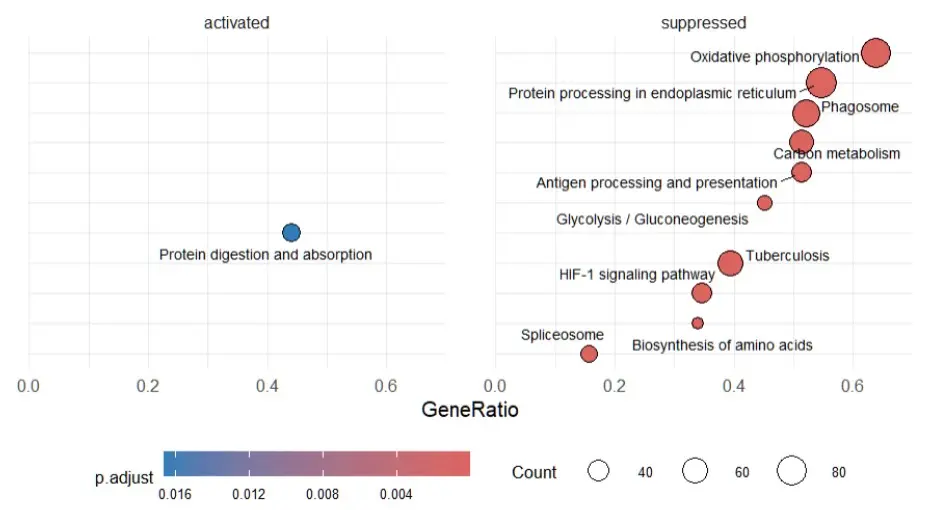
In proteomic and functional enrichment analyses, thousands of hypotheses are tested simultaneously against the same data. Without multiple comparisons correction (Benjamini–Hochberg, Bonferroni, Holm), a non-trivial fraction of findings are statistical noise indistinguishable from real signal. The same principle is a standard piece of Statistical Analysis Plans in confirmatory clinical trials under ICH E9. Author's personal reflection: it could extend to the design of multi-agent AI workflows — an open conjecture, not a thesis.
Loading charts...
Loading chart...
Loading chart...
Loading formulas...
Does your healthcare AI pipeline have a statistical analysis plan?
We help define rigorous validation criteria for AI systems in clinical research and proteomics.
Get in touch